
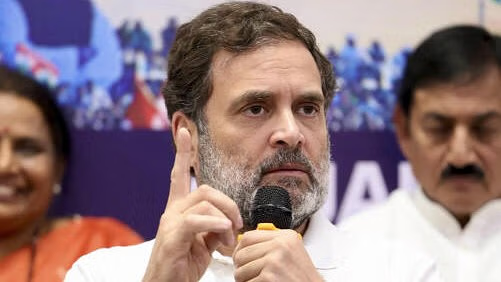
Rahul Gandhi has voiced strong criticism against the Waqf (Amendment) Bill, labeling it as a tool to marginalize Muslims and undermine their constitutional rights. He argues that the legislation, introduced by the BJP-led government, sets a dangerous precedent that could eventually target other religious communities, including Christians.
The Waqf Bill, passed in the Lok Sabha and Rajya Sabha, introduces significant changes to the management of Waqf properties, which are endowments for religious or charitable purposes in Islam. The bill aims to enhance transparency and accountability in the administration of these properties, but critics, including Gandhi, contend that it disproportionately affects Muslim communities by making it easier for government authorities to question the ownership of Waqf properties.
Gandhi’s concerns escalated when an article in the RSS-affiliated publication Organiser compared the land holdings of the Catholic Church to those of the Waqf Board. The article claimed that the Catholic Church is the largest non-governmental landowner in India, possessing vast tracts of land acquired during British rule. Gandhi interpreted this as a sign that the RSS might shift its focus to scrutinizing Christian institutions, furthering what he sees as a divisive agenda.
He emphasized the importance of the Constitution as a safeguard against such actions and called for collective efforts to defend it. The controversy surrounding the bill has sparked debates about its implications for India’s secular fabric and the rights of minority communities. Critics argue that the bill could lead to the disenfranchisement of minorities and damage India’s image as a secular nation.
his issue has also led to political tensions, with opposition parties planning to challenge the bill’s constitutionality in the Supreme Court. Gandhi’s remarks highlight broader concerns about the potential misuse of legislative power to target specific communities under the guise of reform.

